Use cases

For conversations that deserve a second look.

A single local workflow can support different kinds of review. These examples describe evaluation scenarios, not approval for production or regulated use.

Clinical evaluation

Review a consultation with its source

Use sample or de-identified recordings to examine transcript correction, consult or SOAP draft notes, and the clinical source-finding workflow. Review every note before it enters any record.

The prototype has no clinical validation, encrypted local storage or practice integration. Do not use live patient data pending review.
Legal work

Find wording in an interview or meeting

For synthetic or appropriately cleared material, examine the editable transcript, timed audio moments and source excerpts. These can help a reviewer return to what was said.

Assess consent, confidentiality, privilege, retention and device security within your own practice before real matter use. WordHeld makes no legal compliance claim.

Professional meetings

Track decisions and follow-up

Turn an imported recording into a corrected transcript, short summary and editable action list. Use titles and people to find conversations later.

Personal conversations

Remember context without losing nuance

The personal workspace offers meeting or simple notes, a mind map and Emi search. Retrieve relevant passages before acting on a remembered detail.

Across every setting

Keep the human in the review loop.

WordHeld’s generated text is a draft drawn from transcript sentences. Recognition errors can flow into summaries or notes. Check the recording and correct the transcript before making decisions from the output.

See how source review works

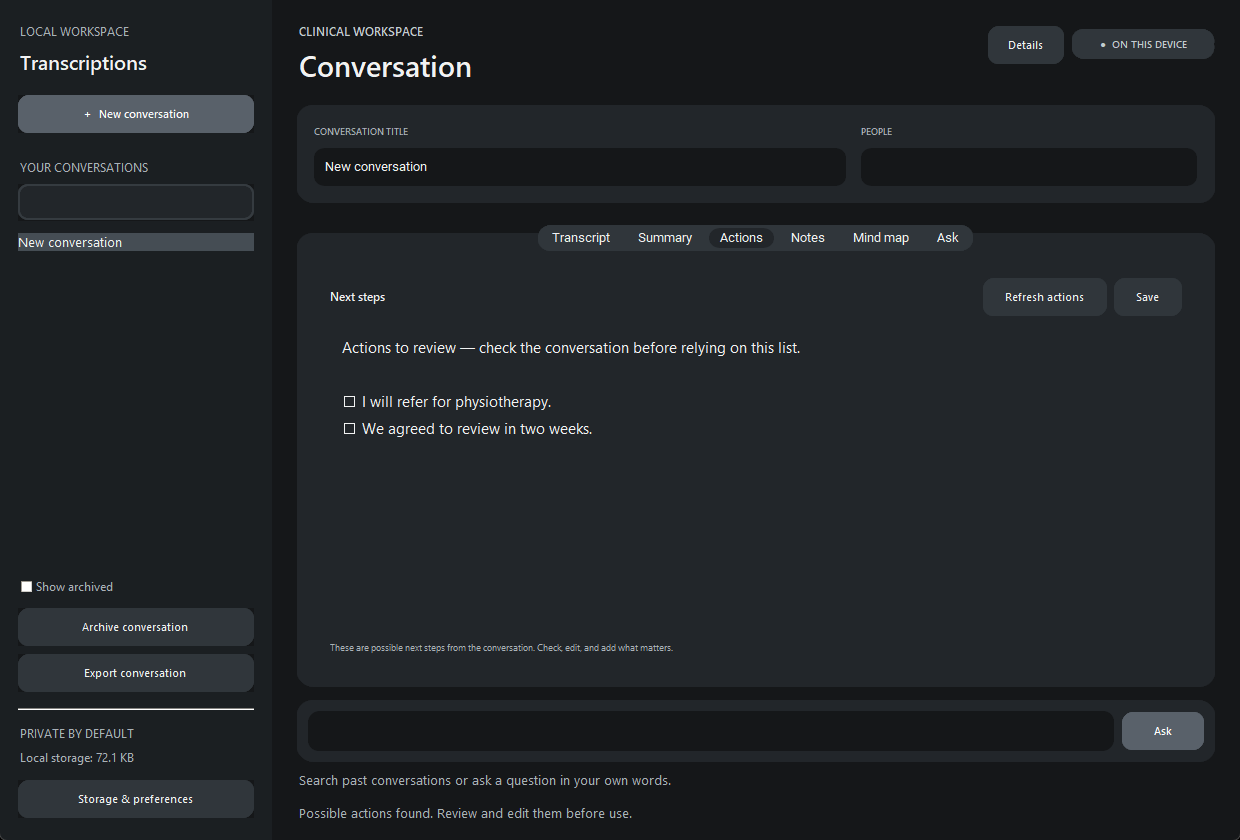
WordHeld Windows prototype showing reviewable sample action items
Current Windows prototype · sample content · actions view

Evaluate with clear boundaries.

Read the local storage and security limits before trying the prototype.

Privacy and limits